What Are the Benefits of IQF Fruits and Vegetables Compared to Block Frozen?
Understanding Freezing Methods in the Food Industry
What is IQF (Individually Quick Frozen)?
Imagine picking a perfectly ripe mango and freezing it instantly so it tastes almost the same months later—that’s essentially what IQF (Individually Quick Frozen) technology does. Instead of freezing large batches together, IQF freezes each fruit or vegetable piece separately using extremely cold temperatures, typically between -30°C to -40°C. This rapid freezing process happens within minutes, forming tiny ice crystals that preserve the food’s cellular structure.
Now, why does that matter? Because the structure of food determines everything—its texture, taste, and even how it feels in your mouth. When freezing is slow, large ice crystals form and damage the cells. But with IQF, those crystals remain small, meaning your strawberries don’t turn mushy and your vegetables don’t lose their crunch.
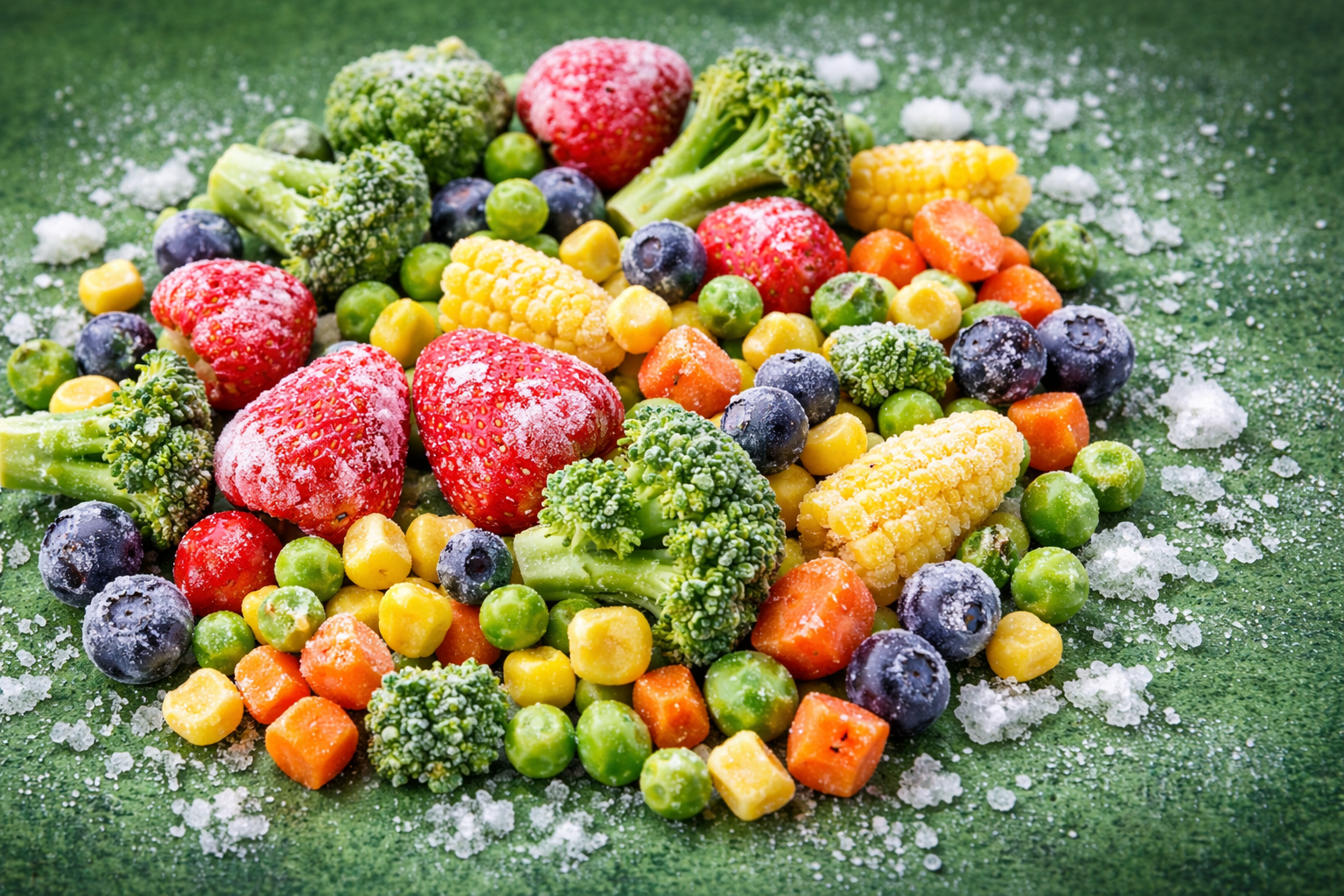
Another key advantage is that each piece remains separate. So instead of dealing with a frozen brick, you get free-flowing fruits and vegetables that you can pour out like grains of rice. This alone makes IQF incredibly practical for both households and businesses.
In simple terms, IQF is like pressing “pause” on freshness—locking in quality at its peak and letting you use it whenever you want without compromise.
What is Block Freezing?
Block freezing is the traditional method most people are familiar with, even if they don’t realize it. In this process, large quantities of fruits or vegetables are packed together and frozen as one solid mass. Think of it as turning a box of produce into a giant ice cube.
The freezing process here is much slower compared to IQF, often taking hours or even longer. During this time, larger ice crystals form within the food, which can rupture cell walls and lead to a noticeable loss in texture and flavor. When thawed, the result is often softer, wetter, and less appealing produce.
There’s also a practical downside. Since everything is frozen into a block, you can’t easily separate portions. You usually have to thaw the entire block—even if you only need a small amount. That can lead to waste, inefficiency, and even food safety risks if not handled properly.
That said, block freezing isn’t without its place. It’s cheaper to produce, easier to store in bulk, and ideal for industries where the final product doesn’t require intact pieces—like soups, juices, or purees.
So while block freezing is cost-effective, it often sacrifices quality and convenience—two areas where IQF clearly stands out.
How IQF Technology Works
Rapid Freezing Process Explained
The magic behind IQF lies in speed. Picture a conveyor belt moving fruits or vegetables through a freezing tunnel where ultra-cold air blasts them from all sides. Within 20–30 minutes, each piece is frozen individually, preserving its original shape and quality.
This speed is crucial because it prevents the formation of large ice crystals. Instead, tiny crystals form inside the cells, which do far less damage. As a result, when the product is thawed, it retains its natural firmness and appearance.
It’s almost like comparing a slow freeze to a sudden snapshot. One distorts the image, while the other captures it perfectly.
Role of Temperature and Airflow
Temperature alone isn’t enough—airflow plays a massive role. High-velocity cold air circulates around each piece, ensuring even freezing from all directions. This uniformity is what keeps the pieces separate and prevents clumping.
The combination of extreme cold and rapid air movement ensures that heat is removed quickly and efficiently. It’s a carefully controlled process designed to maintain quality at every stage.
Without this level of control, you’d end up with uneven freezing, inconsistent quality, and all the issues associated with block freezing.
Key Differences Between IQF and Block Frozen
Structural and Physical Differences
The most obvious difference is physical. IQF products are loose and free-flowing, while block frozen products are solid and compact. This difference might seem simple, but it has massive implications.
With IQF, you can scoop out exactly what you need. With block freezing, you’re often forced to deal with the entire batch. This affects everything from kitchen efficiency to food waste.
Processing Time and Efficiency
IQF is faster—significantly faster. While IQF can freeze products in under 30 minutes, block freezing can take hours or longer.
This difference in time directly impacts quality. Faster freezing means better preservation, while slower freezing leads to degradation.
Major Benefits of IQF Fruits and Vegetables
Superior Texture and Quality
Let’s talk about texture—the deal-breaker for most consumers. Nobody wants soggy vegetables or mushy fruit. IQF solves this problem by preserving the natural firmness of produce.
Because the cellular structure remains intact, IQF fruits and vegetables look and feel much closer to fresh produce. This is especially important for products like berries, mangoes, and broccoli, where texture defines quality.
Better Nutritional Retention
One of the biggest myths about frozen food is that it loses nutrients. In reality, IQF products are often frozen at peak ripeness, locking in vitamins and minerals immediately.
Since the freezing process is so fast, there’s minimal nutrient loss compared to slower methods. This makes IQF a surprisingly healthy option—sometimes even better than “fresh” produce that has spent days in transit.
Enhanced Flavor Preservation
Flavor is closely tied to both texture and nutrients. When cells are damaged, flavor compounds leak out, resulting in bland or watery produce.
IQF prevents this by maintaining the integrity of the food. The result? Fruits and vegetables that taste fresher, sweeter, and more vibrant—even after months in storage.
No Clumping – Easy Portion Control
This is where IQF truly shines in everyday use. Since each piece is frozen individually, you can take exactly what you need—no more, no less.
For restaurants, this means precise portioning and cost control. For households, it means convenience and less waste. You’re no longer forced to thaw an entire bag just to make a single smoothie or meal.
Reduced Food Waste
Food waste is a massive issue globally, and IQF helps tackle it head-on. By allowing users to portion accurately, it minimizes unnecessary thawing and spoilage.
Think about it—how often have you thrown away leftover thawed vegetables? With IQF, that problem practically disappears.
Operational Benefits for Businesses
Convenience in Food Service
For restaurants and food processors, time is money. IQF products can go straight from freezer to pan without thawing, saving valuable prep time.
This efficiency translates into faster service, consistent quality, and happier customers.
Improved Inventory Management
Because IQF products are easy to portion and store, they simplify inventory management. Businesses can track usage more accurately and reduce over-ordering.
This level of control can significantly improve profitability over time.
Long-Term Value
While IQF may have a higher upfront cost, its benefits—reduced waste, better quality, and improved efficiency—often make it more cost-effective in the long run.
Market Trends and Demand for IQF Products
The demand for IQF fruits and vegetables is growing rapidly, driven by increasing health awareness and the need for convenient, high-quality food options. Consumers today want products that are both nutritious and easy to use—and IQF delivers exactly that.
As global supply chains improve and cold storage infrastructure expands, IQF is becoming the preferred choice in both developed and emerging markets.
Conclusion
IQF fruits and vegetables represent a significant leap forward in food preservation technology. By freezing products quickly and individually, IQF maintains texture, flavor, and nutritional value far better than traditional block freezing.
While block freezing still has its place—especially in cost-sensitive and industrial applications—IQF offers unmatched convenience, quality, and efficiency. Whether you’re a consumer looking for better food or a business aiming to optimize operations, IQF stands out as the smarter choice.
FAQs
1. Are IQF fruits healthier than fresh fruits?
IQF fruits are often frozen at peak ripeness, which helps preserve nutrients. In many cases, they can be just as healthy—or even healthier—than fresh fruits that have been stored or transported for long periods.
2. Why are IQF products more expensive?
The advanced technology and energy required for rapid freezing increase production costs, making IQF products slightly more expensive than block frozen ones.
3. Can IQF vegetables be cooked directly without thawing?
Yes, most IQF vegetables can go straight from freezer to cooking, saving time and preserving quality.
4. What industries benefit most from IQF?
Food service, retail, and beverage industries (like smoothie production) benefit the most due to the convenience and quality of IQF products.
5. Does IQF extend shelf life?
Yes, IQF products typically have a long shelf life while maintaining quality, as long as the cold chain is properly maintained.